Columbus, Ohio USA
Return to Homepage www.shortnorth.com
Columbus, Ohio USA
Return to Homepage www.shortnorth.com
In Memory of ...
Remembering Those Who Have Come and Gone - With Love
Return to Features Index
Return to Homepage www.shortnorth.comCarol Solley
1958-2016
By Margaret Marten
September/October 2016 Issue
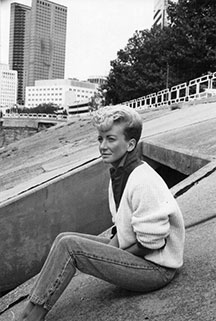
Carol Solley Carol Solley, who turned her talent as an artist and passion for color into a vocation as a hair stylist, will be missed by many. She died unexpectedly on July 12, 2016, at her home of natural causes. She was 58.
Solley began her career at Jacob Neal Salon in German Village, later working at Salon Lofts in the Short North from 2006 until 2014. “She painted people’s hair,” said longtime friend and client Amy Fulmer. “Carol was a master at color, doing color – hair color – probably one of the best. I really feel like her knowledge of painting and art transferred over into her work.”
Solley was born in Dallas, Texas. Her family eventually moved to Columbus where she graduated from Upper Arlington High School, later studying psychology at Humboldt State University in California.
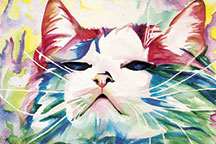
She pursued an interest in art during high school and college, taking classes and producing watercolors, many of animals, which she loved. Liz Plotnick-Snay, a Short North resident and devoted client who first met Solley at Jacob Neal Salon, recalls her passion for pets. “I would often bring my dog with me. She was always talking about her dogs and her cats. She was a huge animal person, so I actually just went online and made a donation to Pets Without Parents [in her name].”
Artwork by Carol Solley Horses were another joy. An avid horseback rider, she regularly attended the All American Quarter Horse Congress in Columbus and was trained in Western style riding. Corgie dogs held a special place in her heart, (she owned one, King) as well as her cats.
She enjoyed rock music, attended concerts, and was a Rolling Stones fan. According to Fulmer, Solley was a lot of fun to be around. “If Carol was going out, it was going to be a good time.”
Plotnick-Snay described her as “bubbly” and (admirably) thin. “Carol was a small lady at five foot two and a hundred pounds with a gigantic personality,” added Fulmer. “She had a big presence in everyone’s life.”Contributions in Carol's memory may be made to Pets Without Parents via their website www.petswithoutparents.net
© 2016 Short North Gazette, Columbus, Ohio. All rights reserved.
Ronald E. Fauver (1931-2014)
Maria Galloway pays tribute to a generous and faithful friend
maria@pmgallery.com
July/August 2014 Issue
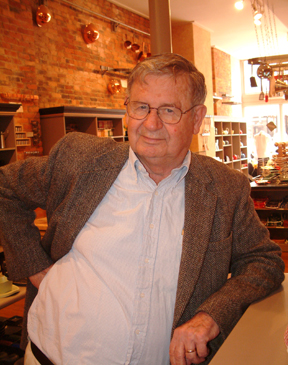
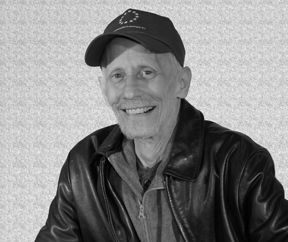
Ron Fauver, 2006 © Gus Brunsman III I first met Ron Fauver not long after we opened pm gallery in 1980. He would come in on Sundays and look at the artwork. There was a painting by Michael Wassermann that he was pondering for quite awhile. Eventually it sold, but not to Ron. Nonetheless he continued his Sunday visits and introduced himself. For those first months we called him Mr. Fauver, being respectful people. He finally corrected us. “Call me Ron. I was a career Marine and calling me Mister is kind of demeaning.”
Thus began a long friendship. Ron fed us dinner for many years, nearly every night. He would stop in and proclaim “I have a plan.” What kind of plan? I would respond. “A chili plan!” Or perhaps “A curry Plan!” Ron was a wonderful cook. His Real Men Eat Quiche with seafood and cold curried yogurt soup come to mind. He made a killer hot and sour soup.
He also did Sunday brunch, which we ate while listening to the radio. Saturdays we had breakfast at Jean’s Diner. So much of our relationship centered around food, and art.
Ron was a board member at ArtReach Gallery. He took printmaking classes at CCAD and was an avid photographer, documenting every DooDah Parade for as long as he was able.
It wasn’t just art, it was also history. We saw an exhibit of Currier and Ives lithographs at the Riffe Gallery, lovely Americana images on loan from the Ohio Historical Society. The first thing we noticed was how old and unarchival the matting was. As part of Ron’s interest in prints, he had developed a technique for mat cutting. He decided right then that he was going to volunteer at the Historical Society and properly frame their collection. And so he did. He worked there until his health no longer allowed it.
Ron was a romantic. Early in our relationship, he revealed that he had lost his wife. We found out later that he had really just misplaced her when she divorced him. It was that divorce that brought him to Italian Village. He was a sensible man and wanted to live closer to work so he could walk. His first home was in a row house right above 670 with an amazing view of downtown. Then he purchased the rambling brick home that he lived in until the end of his life. The house had been divided into a duplex and had two apartments in the back. The tenants he let stay. He opened up the house, saddened to find the banister was not inside the wall after all, and set about with big plans, most of which never quite happened. Still the house was warm and inviting, full of Ron clutter, like machine parts, antique china, heirloom furniture, books, printing presses, and artwork.
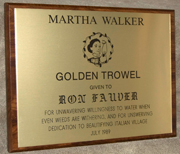
Ron received many awards during his lifetime. Among his favorites was the Martha Walker Garden Club’s Golden Trowel Award in 1989 “For Unwavering Willingness To Water When Even Weeds Are Withering, And For Unswerving Dedication To Beautifying Italian Village.” A month prior to purchasing his home at 60 Hubbard in August of 1982, he had attended the dedication of Italian Village Park and liked the fact that there was this nice little park directly across the street from the house. Ron was a romantic, but also a warrior. His years as a Marine had made the concept of freedom very precious to him. He was a free thinking Republican. He was a crack shot, but I never saw him carry a gun. He didn’t have to.
Ron was on the hunt for a red-haired girl with freckles. Or, as he would say “close enough.” Nancy was that girl. She welcomed him into her heart and her family and together they shared dreams which came true when Nancy opened the Cookware Sorcerer. Buying trips meant travel, to Chicago, Las Vegas or San Francisco. And that meant eating out, something Ron took very seriously. That and having the right tools, whether it was a restaurant stove or a perfectly sharpened knife, Ron was serious about the art of eating.
Ron was generous and loved theater. He had season tickets to Players Theater and would take a date d’jour plus another couple. For many years that other couple was Michael and me. We saw some amazing productions, thanks to Ron. And, of course, he made the dinner beforehand as well.
Ron had a wonderful sense of humor, but a “hah” was the best you could get out of him most days. It was a wonderful day if you actually got him to laugh. So, of course, that was always one of my goals.
Ron was woven into the fabric of our lives. He witnessed our courthouse wedding and flew himself to Florida for the informal family reenactment, taking photos that are treasured. He loaned us the down payment on our first house. He watched our store if I was sick. He was often mistaken for my father and neither of us minded that.
It pleases me greatly that he lived to see the Garden Theater become the venue for Short North Stage. He saw several performances there and has asked that you make donations in his name to the theater. It will be a lasting legacy of the sort Ron loved the most. Donations can be made online at www.shortnorthstage.org or by mailing a check to PO Box 10689, Columbus OH 43201. There is a place in the online donation process where you can indicate “in memory of Ronald Fauver.”
Ronald E. Fauver was 83 when he passed on June 6, 2014. He is survived by his wife, Nancy Haitz, three sons and one granddaughter.
Ron was the epitome of Always Faithful. To his Country, his state, his school, his loved ones, his community. Semper Fi, Ron. And safe journey on your next great adventure.
Monkeys Retreat Co-Owner Stanley Bobrof (1942-2014)
Beloved beatnik was trailblazer and consummate conversationalist
By Margaret Marten
May/June 2014 Issue
Stanley Bobrof in 2007 Photo © Rick Borgia Stanley Bobrof, co-owner of Monkeys Retreat, the iconic beatnik store selling alternative literature and other sixties stuff in the University District and Short North for more than 30 years, passed away on February 12, 2014, from emphysema. He was 72.
Bobrof was born in Akron, Ohio, the son of Dorothy and Leroy Bobrof. The family, including his sister Jeri, lived in Canton until 1956, then moved to Columbus where Bobrof attended Eastmoor High School until his graduation in 1960. He later studied at the Ohio State University and University of Cincinnati where he graduated in psychology. His first job out of college was as a counselor at the Ohio State Reformatory in Mansfield.
Monkeys Retreat, located at 1202 N. High St. when it closed in 2010, was owned by Bobrof and two local musicians, Darryl and Ro-z Mendelson. The store remained in business for over 30 years, first in the University District at 2400 N. High St. and later in the Short North. There were a number of precursors to that business which the brothers and Bobrof and their friend Allen Ross operated beginning in the late ‘60s and ‘70s that made their mark (and waves) on the Columbus community: Charlie’s Guitar, Postively Fourth Street, and Absolutely Positively Fourth Street were trendsetters for musicians, counterculture consumers and spiritual seekers.
Charlie Einhorn, who met Bobrof in High School and remained a lifelong friend, said the two loved to travel and went on road trips together and that New York City was a favorite destination. They worked as cab drivers there for six months in the early ‘70s. The city would become Bobrof’s home again a few years later when he and Darryl Mendelson opened SohoZat in Manhattan in 1978, described as the “hippest store in the history of the world,” selling publications, newspapers and comix no one else had, attracting the likes of Art Spiegelman and other local celebrities. “Although having Monkeys Retreat was great,” said Ro-z, “Stan wanted more. He wanted to be in New York where his big ideas could meet the big city.” Skyrocketing rent, however, forced Bobrof and Mendelson out after 14 years, in 1992, the year they returned to Columbus and to Monkeys Retreat.
A colorful example of Bobrof’s early wanderlust occurred in 1970 when, inspired by a trip to the Woodstock Festival the previous summer, he purchased three school buses with money from a small inheritance and began traveling around the eastern United States in the buses to music festivals with the Mendelson brothers, Charlie Einhorn and Candy Watkins. One of the highlights was spending a month at the 2nd Atlanta International Pop Festival before heading cross country to California and Oregon where they met Ken Kesey and stayed at a commune of former Merry Pranksters for a few days before returning at the end of the summer.
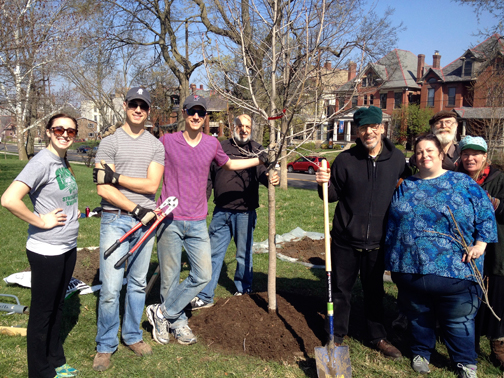
(LtoR) Meg Boley, Rodrigo Iglesias, Mike Parker, Ro-z Mendelson, Darryl Mendelson, Lisa Levy, Bill Finzell, and Robbi Palmer at a tree planting in Goodale Park to memorialize Stanley Bobrof. Longtime friend Alan Fliegel describes Bobrof as a trailblazer. Charlie’s Guitar, Bobrof’s first business venture at E. 13th and High streets, selling hippie apparel and alternative publications, was a sensation. Bobrof claimed it was the first store in Columbus to sell bell-bottoms. Einhorn describes it as “the right store at the right time in the right place.” Positively Fourth Street, which operated in the early ‘70s for two years before transitioning into Absolutely Positively Fourth Street, was one of Columbus’s first community bars. And SohoZat in the Big Apple couldn’t have been a more vivid testimony to Bobrof’s trailblazing talent, glorifying free expression, adventure and just plain fun. Yet, it was Monkeys Retreat that ultimately became his home, his literary “retreat,” where he would work, argue and laugh for the next 18 years after SohoZat’s closing.
“He sat there behind the counter and he loved it,” said Einhorn. “His thing was people, meeting people, talking to people. He could be provocative because he was very direct and didn’t put up with nonsense.” He loved knowledge, said his niece Lisa Levy. “He was into so many things. He loved reading, and he loved to argue just to learn.” Writing was a pasttime, and Bobrof put it into practice by publishing a magazine in New York – one issue of Wave and five issues of Zat. He also contibuted to Einhorn’s Innerart Bits blog reviewing publications from Monkeys Retreat.
“One of my favorite things was to hear Stanley and Charlie talking – philosophers and historians,” said Fliegel. “I got my doctorate, but they always turned me on. It was just so cool to be around them.” Einhorn says he relied on Bobrof to validate viewpoints and would routinely ask himself what Stanley might think about one thing or other. “He and I used to talk a lot, exchange ideas,” he said. “People would think we were fighting or we were having an argument. No, we were just talking, just exchanging ideas. We agreed that it’s okay to disagree.”
An intense interest in books and magazines is something Bobrof brought back to Columbus from New York, according to Watkins. “Monkeys Retreat used to be kind of a collective, a cooperative, and then when Stanley came back, he turned it into the newsstand – books, literature, and that kind of thing.” And that type of atmostphere could easily generate conversation with customers, which he loved.
Bobrof called Monkeys Retreat a space age variety store, and he called himself a beatnik, not a hippie, and made sure you knew the difference. “It was a really important distinction for him,” said Einhorn, “because hippies require no intellectual investment. Anybody could be a hippie. You just have to love flowers and music or whatever.” But you couldn’t just call yourself a beatnik. “You had to know poetry and Indian philosophy, and you had to know about jazz, and you had to know about obscure French poets. You had to have lived.”
“Uncle Stan was the kind of person who no matter how much you know about him it would never ever summarize the person he was,” said his niece, and in spite of his wanderlust ways, he was a family man at heart, attending to the needs of his immediate family and close circle of friends. “He was like the patriarch,” explained Ro-z.
“He had times when he would leave and go on adventures,” Watkins said, “but he always seemed to come back home. His home was here, and that was a good thing because we loved him and wanted him home.”
Johnny Lee Ringo (1934-2014)
WILL BE MISSED BY MANY
March 2014
Longtime resident of the Short North for over 50 years and member of the Short North White Castle crowd since the day it opened, enjoyed coffee and great conversation with many good friends.
Johnny Lee Ringo, aka “Joe” the electrician by trade, carpenter and handyman. Joe completely built his entire home on Say Avenue and lived there until his death.
He never married or had children, but took others under his wing like family. He was a real person, true friend and big part of our family.
When he died, he took part of us with him. God got a very special man.
Joe will never be forgotten and always be a lifetime friend and family member. Also, a special thanks to Shaw Davis for all their professional services.- Robert Saultz and the White Castle Crowd
Sandy Davis (1944-2013)
Mother, wife, friend and mentor
Short North bed and breakfast owner meant much to many
By Margaret Marten
November/December 2013 Issue
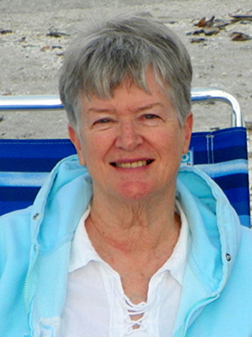 Sandy Davis, owner of 50 Lincoln-Short North Bed and Breakfast, passed away unexpectedly at the Ross Heart Hospital on August 23. She had experienced problems with low blood pressure over the years, with no specialist able to determine the cause or provide a diagnosis. She was 69 years old and lived with her husband Don in the Short North for over 20 years. The couple celebrated their 50th wedding anniversary shortly before her passing.
Davis was born in Charleston, West Virginia, to the late Charles and Julene Harris. She attended Hurricane High School and married Don Davis, fresh out of the Air Force, not long after her graduation in 1962. “She was a straight-A student in school," he said, “but instead of her going to college, we got married. I went to college on a basketball scholarship and she went to work.” Her brother, Larry Harris, two years her junior, said she was an avid reader, like their mother, with a strong work ethic, which their father, an iron worker, instilled in them. “She went right to work,” he said. “And when she worked, she worked.”
After Don completed college, the couple moved to Columbus and later to Reynoldsburg where they raised their two children, Christy and D. Scott. Davis worked an assortment of sales jobs over the years, perfecting her people skills that would later benefit her as a bed and breakfast owner for almost 20 years. She had a natural talent dealing with the public. According to family members, she loved meeting people and she loved big Victorian homes.
“They fell in love with this neighborhood when they were bringing my brother back and forth to Ohio State,” said daughter Christy Demetry, who also lives in the Short North. “They would drive up Neil Avenue, and I remember going with them and they would be like ‘Oh, look at these amazing houses; wouldn’t it be great to move into one of these some day.’”
Davis decided she wanted to open a bed and breakfast after watching a news story about a German Village woman who ran one. Describing her revelation in a Short North Gazette 2007 interview, Davis said that at that moment, while viewing the feature, she knew it was something she wanted to do. In 1991, after the children had grown, she and her husband, who is a builder-remodeler, left the suburbs and purchased a house on Smith Place. The home, which never actually became a bed and breakfast, was the first of many in the Short North they bought, lived in and renovated. Her talent, though, was more in decorating than rehab, said Don. “I always felt she should have been an interior designer. I wanted her to go to school for it, but she was busy, especially after we bought the bed and breakfast.”
The Davises purchased Harrison House Bed and Breakfast at 313 W. Fifth Ave. a few years after moving into Smith Place, then sold Harrison House to Lynn Varney in 2006. Varney said the Davises became her friends (and neighbors) at that time and Sandy her mentor. “I leaned on her a lot in the beginning. I talked to Sandy daily for a long time and then weekly for the entire time I’ve owned the bed and breakfast.” said Varney. "She was a wonderful, warm-hearted, lovely person.”
When the Davises bought 50 Lincoln Bed and Breakfast in 2004, they continued to run Harrison House until its sale in 2006. By then, after a dozen years in the business, with health concerns and an ailing mother, Davis decided to step back from the day-to-day operation and enlisted Trelene Turner, who had worked at Harrison House, to become manager at 50 Lincoln in 2006. Davis continued to be the front person and take reservations, however. “She was just very warm and very inviting,” said Turner, “so it made my job easy when they walked in the door.” Davis wasn’t able to meet with one of the last reservations she took, but a letter from that scheduled guest stated she felt she had known Sandy all her life even though they’d never met and had only spoken a couple times.
“There’s that part of you that feels like you want to devote yourself to a business like this,” said Turner. “You definitely have a passion, whether it’s the nurturing part – she was a great nurturer, her family meant everything to her.” In fact, her strong role as a mother is something those close to her mention again and again and obviously admire. “The place was packed with friends and relatives at her funeral,” said Harris, “and everybody that knew her always talked about what a good mother she was. Her kids had special needs at the beginning, so that’s why it became her life, you know.”
Their “later baby,” Murphy, was a St. Bernard, said Don. The pup lived with them in their quarters at Harrison House, and briefly at 50 Lincoln until he got old and infirm. Later, they adopted a rescue dog Zoe, a chocolate Lab, who knew a good mother when she saw one and clung to Davis. “She’d only pay attention to me when Sandy wasn’t around,” said Don. "We still have her. She’s quite old right now.”
According to her brother, the two grew up with dogs and Sandy loved them. “Dogs were always a part of her life.”
The Davises’ first grandchild, Charlotte, arrived three years ago. Sandy was elated and looking forward to seeing her grow. “She waited so many years to have a grandbaby and loved her,” said Turner. “I’m a grandma of seven, so I know; we always shared.”
“She was a phenomenal grandmother,” added Varney. “It was a heartbreak for her that she could no longer watch her granddaughter [with her health concerns].”
The Davises traveled when they could, taking their children to Disney World in earlier years and vacationing at their Florida home in the Keys, later enjoying an occasional cruise. “We just took a cruise last February,” said Don. “It was the last one we took, the Western Caribbean.”
He and the children tried to persuade Davis to write about her experiences as an innkeeper and publish a book but never could convince her. “She was very personable and enjoyed talking to people and meeting people from all over the world,” said Don. Guests arrived by way of the Ohio State University, Nationwide and Battelle. “I always told Sandy, ‘you can have a party every day of the week if you want,’” said Turner who, like Davis, is enamored with the bed and breakfast life and continues there as an innkeeper working for the Davis family. “I’ve always felt honored to be able to say that I have this job,” she said.
Davis’s son and daughter can’t seem to praise their mother enough. Demetry says she and her mom talked every day, sometimes several times a day, over the phone. “She was always the strongest person in my life,” she said. “And she was so good, and this is the most important thing about her, she was so good at putting life’s obstacles in perspective, and I think that’s why so many people loved talking to her and I think that’s why she made such an amazing friend and a mom and owner of a bed and breakfast.”
© 2013 Short North Gazette, Columbus, Ohio. All rights reserved.
March 2010
by Rick Blackburn
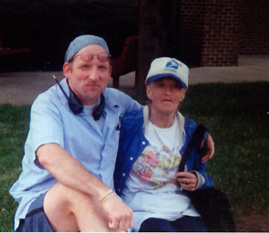
Rick Blackburn and Margie Love
My name is Rick Blackburn. I have been dubbed the “Short North Resident Mailman” by the kind folks at the Short North Gazette, and some others around the neighborhood. I suppose that’s true, to some degree. Although I am a Westsider, I have been knocking around the streets of the Short North a number of years – since 1984. When I first started with the post office, the Short North Station “A” was considered the worst of the worst job assignments for a rookie carrier. Indeed it was gritty.
There are many stories I can tell of the Short North. What is now the Surly Girl Saloon was once The Sand Bar, a postal hangout, later it became the sometimes notorious Downtown Connection. What a bunch that was. Anyway, I suppose you would have to allow me some Short North gravitas. It was just the way things worked out. In my years in the area, I have met hundreds of the residents and business people. Many others I know by name or reputation, but no one was ever more memorable than the late Margaret Belle Love. She wasn’t involved in the bustling art scene. She wasn’t a five-star heartbreaker in any one of the glimmering nightspots. She was a barmaid at the old Dutch for many years. Old Short North aristocracy. At least she was and is to me as I see and saw it. She was one of those magical people who come along so rarely in one’s life.
Margie had the prettiest blue eyes. She said she was German-Dutch. I used to call her a Nazi. Piss her off. Worked every time. She’d always say “I may be German-Dutch, but I ain’t no Nazi!” It was hilarious, as so so many other things she did and said. In her later years (Marge died on Christmas day), she could on occasion be caught down at Mike’s having one of her two allotted Budweisers, talking to a friend. Maybe Rosie. Maybe Beau. If you live in the neighborhood, you knew her. The last few years, she used a walker. She covered a lot of Short North on that thing. The stories I could tell of Marge make me warm, happy and sad. But mostly loved.
Short North mourns the loss of neighborhood activist, devoted servant
Lawrence Glenn "Larry" Brown (1950-2008)
August 2008
by Jennifer Hambrick
Larry Brown, 1985 Longtime Italian Village resident Lawrence Glenn “Larry” Brown, known among Short North volunteers as a concerned and committed neighborhood activist, died May 30 of kidney failure.
“He was just the kind of person you wanted to put in your pocket like a lucky stone,” said Brown’s friend Susan Orlos, co-pastor of St. Luke Mission, Brown’s former parish within the Reformed Catholic Church (RCC). “He’s been a quiet and gentle voice and has changed the life of everyone here in the Short North.”
Brown, 57, had suffered serious kidney problems for more than a decade, and heart and circulatory problems for almost a year. He is survived by partner Michael Koza, parents Patsy and Charles Brown, daughter Patricia Collins, siblings Patricia and Richard Vesper, Sue and Steve Richards, Rick and Jeannie Brown and many nieces, nephews and friends. He will be buried in Mound Hill cemetery in his native Gallipolis August 10.
While a teen, Brown moved to Upper Arlington with his family. He graduated from Morehead State University in Morehead, Ky., with an associate’s degree in food service administration and a minor in horticulture.
Brown worked in food service for Long John Silver’s in Tuscaloosa, Ala. He returned to Ohio in 1978 after his daughter, Patricia, 30, was born, and served as food service director of the University Inn in Athens.
After returning to Columbus in the early 1980s, Brown worked in food service and horticulture for many organizations and enterprises, including Meals on Wheels, Verick the florist, Plantasia – an interior plantscaping company, and the former Inn Town Restaurant and Roadhouse Annie’s.
Brown moved to Italian Village in 1985 and served in numerous neighborhood organizations. He joined the Italian Village Commission in the late 1980s and was the commission’s vice chairperson when he stepped down in 2004. While on the commission, Brown helped bring about the construction of the New Village Homes on Summit Street.
In the late 1980s, Brown spoke out against the construction of a McDonald’s restaurant – designed to have its parking lot displayed prominently out front – at the corner of High Street and 1st Avenue. Steve Hurtt, who served as chairperson of the Italian Village Commission for more than a decade and proprietor of Urban Order Architecture, came to the Short North after the McDonald’s episode, but believes Brown was right to fight the hamburger giant’s bid.
“Putting a suburban McDonald’s at the corner of 1st and High is just not an appropriate solution to the neighborhood,” Hurtt said, “and I think Larry got that early on.”
While on the board of the Italian Village Improvement District Association, Brown helped get a grant from the Columbus Foundation to create a park at the corner of 2nd Avenue and Mt. Pleasant Avenue. The park was installed in 1998 and has been maintained by the Martha Walker Garden Club, which Brown also served as a board member since the early 1990s.
“Larry volunteered many hours in that park to weed and mulch and clean up and sweep and empty the trash,” said Christie Nohle, who designed the park at 2nd Avenue and Mt. Pleasant.”
As a concerned Italian Village resident, Brown worked with his neighbors to get funding to create the I-670 cap, and, in the early 1990s, to give his neighbors on Mt. Pleasant the option to have magnolia trees planted in their front yards.
Brown received the Short North Neighborhood Foundation’s (SNNF) Community Leadership Award in 2004 (the current Short North Foundation), more than a decade after going on dialysis and about six years after undergoing a kidney transplant which, friends say, compromised his health and eventually failed.
“What impressed me most about Larry wasn’t just the level of his (community) participation, but the fact that he did it while suffering what turned out to be a fatal illness,” said Andy Klein, a friend of Brown’s for 15 years and a past recipient of the SNNF Community Leadership Award. “He had an organ transplant in the middle of all this participation. He continued to work for the betterment of the neighborhood, even when he was undergoing dialysis. The average person would have been discouraged and perhaps retreated into a shell facing his health issues. Larry was just the opposite. It seemed like his community efforts expanded as his health declined. It’s very inspiring to see that kind of dedication to the neighborhood.”
As an active member of the St. Luke Mission, Brown volunteered to collect woolens to give to the homeless in winter and for Project Mary’s Open Arms, a ministry that prepares and delivers meals for the homeless in Columbus’ Downtown and Hilltop areas.
“We would make sandwiches for the homeless shelters Sunday morning and then deliver them,” Orlos said. “(Brown would) be so sick sometimes after making sandwiches. He was there with everything he had until there was nothing left.”
The RCC’s Archbishop David Frazee, who created Project Mary’s Open Arms, recalls Brown as one of that ministry’s first and most dedicated volunteers.
“In all the time I’ve known Larry, he was just very down to earth, very humble,” Frazee said. “He would look for areas that he felt fit him the best and then that’s where he would go and apply his talent – whether it be community issues, he was very much into social justice. He really tried to stand on justice for all people.”
Brown had recently been ordained a subdeacon in the Reformed Catholic Church. He had hoped to finish training for the deaconate when his health permitted.
“(St. Luke’s) was basically his life,” Koza said. “He believed in giving his heart and his soul to the Lord and helping others. Larry’s whole goal in life was to help others and be there for people in need.”
Brown’s daughter, Patricia Collins, 30, says others on Mt. Pleasant Avenue were grateful for his concerned presence in their neighborhood.
“I heard a lot of his neighbors say that they could have called him at one o’clock in the morning and he would’ve lent an ear. He would have done anything for people,” Collins said.
“We really miss having him on the street,” said Mt. Pleasant resident Judi Moseley. “It’s a big loss for all of us.”© 2008 Short North Gazette, Columbus, Ohio. All rights reserved.
Michael "Micky" Bletz (1952-2008)
Short North's Galeria Zona Corazon owner, adventurer, and musician mourned by family and friends
June 2008
By Jennifer HambrickSee 2006 Article on Galeria Zona Corazon
Charismatic Short North business owner and hard rockin’ rock and roller Michael “Micky” Bletz died in mysterious circumstances around the beginning of April. He was 55.
Micky Bletz, circa 1985. © Photo by Chas Ray Krider
Bletz made a name for himself in the 1980s as front man for the Columbus rock and roll band The Burners and also as owner of a number of local businesses, including most recently the Short North’s Galeria Zona Corazon, a shop specializing in Mexican, Haitian, and Central American art.
Bletz’s daughter, Ramona, 31, found her father dead April 2 in his Victorian Village home. She said the Franklin County Coroner’s Office speculated that Bletz died of natural causes, possibly a heart attack. Ramona Bletz, who usually would be in contact with her father daily when he was in town, last spoke with him on March 28, and said her attempts to reach Bletz by phone after that date were unsuccessful.
“He was just so much more than a father. He was my compadre, my go-to guy, the person who always had my back, the one who stood by me no matter what the situation was. He was always there for me. We traveled together, we went out together. We did everything together,” Ramona Bletz said. “He was just an incredible person. He was my best friend. He was my everything.”
Bletz is also survived by his mother, Beverly Bletz, of Columbus, father Bill and stepmother Jean Bletz, of Hilliard, and five siblings.
“He was a go-cat-go kind of fellow,” said Peggy Barry, one of Bletz’s longtime friends. “He was a man with a plan. He could get the best musicians and the prettiest girls around him at any moment. He was the pied piper. He always had some idea, and damn if he didn’t always bring them to fruition.”
When Bletz, a native of Crestline, Ohio, moved to Hilliard in 1966, he immediately met up with other junior high schoolers who were interested in trends in fashion, music and art. Jack Dauben, one of Bletz’s boyhood friends, remembers Bletz as a “mod” teenager who borrowed eclectically from flashy, European-inspired fashion trends.
“Part of the whole mod ethic was to be constantly searching out new and unusual and interesting things,” Dauben said. “We’re talking about a little more flamboyant look that later was appropriated by the shops on Carnaby Street in London.”
Dauben, a drummer, and Bletz, a guitarist, also shared an interest in rhythm and blues, and soul music, and in bands, like The Kinks and the Yardbirds, that were influenced by it. Even as a high schooler, Bletz heard blues every weekend at the Valley Dale Ballroom.
But he didn’t remain a spectator. LeRoy Scranton remembers when Bletz taught him how to play the bass so he could play a gig at a teen canteen.
“I had never played bass, and so I was sitting in (Bletz’s) house and he was showing me where to put my fingers,” Scranton said. “We sat up all night, and I really didn’t know how to play the songs. He just showed me where my fingers went. I’ve been playing bass ever since.”
In the early 1980s, Dauben and Bletz were the backbone of the rockabilly band Jackie Cupid and the Kooks. Between 2001 and 2005, Bletz co-owned Baffoos, a Grandview skateboarding and snowboarding shop, with former Kooks rhythm guitarist Ricky Barnes.
“He was one of those guys who was the most memorable characters in your life,” Barnes said. “He was one of the most generous people you’re ever going to meet, one of the most loyal people you’re ever going to meet. I feel like in my life I’ve had a few relationships like that, and Michael was one of them.”
The original Burners, circa 1984. (Front L to R) Sonny Pill (guitar), Jamie Lyons (vocal), Micky Burner [Bletz] (guitar); (Back L to R) Michael Gene (bass), Jerry Hale (drums), Mike Reed (piano). © Photo by Chas Ray Krider
Between his Jackie Cupid and Baffoos days, Bletz played for other bands, including The Gangsters and The Burners, local stars in the mid-1980s.
“He was a great rock and roll performer,” remembers Dan Dougan, former owner of Stache’s (later Little Brother’s), where The Burners played. “He was a real slick dresser, too. Really natty. He really knew how to style.”
The Burners gave a Fourth of July performance in 1986 in the Park of Roses that turned a community get-together into an event to remember.
“Way back in the day, that band rocked,” said Bryan Wolfe, an acquaintance of Bletz’s. “When they backed Bo Diddley at what I thought would be a neighborhood picnic, there was a show going on there that was way out of proportion from what you’d expect at a holiday picnic. The music was coming hard and fast. It was a great show.”
Passion was Bletz’s musical trademark.
“He was able to feel a song, not just play the song, but feel the meaning of the song and understand what the song was trying to say and stir in a person,” Scranton said. “And he could put his signature on that. He could make a song that you’ve heard all your life and make it sound familiar, but make it sound different.”
Before opening Galeria Zona Corazon in 1998, in the 1980s Bletz operated the Ohio Gallery and later the Ohio Ethnographic Gallery, with Roger McLane. The Ohio Gallery had initially focused on American primitive art, but added Mexican masks and Haitian art when Bletz joined the business. The basement of the Ohio Gallery also was the birthplace of The Burners, who practiced there.
“(Bletz was) very energetic, very exciting to be around. A great musician, adventurer,” McLane said. “He got into the art business to a large degree because it allowed him to travel. It was just fun traveling with him. I had the eye for the artwork and he had the business acumen. He’d go to a market with a calculator. I’d pick out the stuff, and then step aside and he’d talk with the people.”
Ramona Bletz, who helped run Galeria Zona Corazon, also went on many trips to Mexico and Central America with her father to buy art for their gallery. She said she and Bletz had started closing down the gallery before his death, and had plans to devote more energy to Web-based art sales and other projects. Galeria Zona Corazon is now closed indefinitely.
But Bletz’s friends insist he will not be forgotten.
“What did Schopenhauer say? ‘You never can disappear as long as people remember you,’” Barnes said. “I remember a lot of great times.”© 2008 Short North Gazette, Columbus, Ohio. All rights reserved.
Among friends from beginning to end
Rosie remembered as colorful Short North character
April 2008
By Jennifer Hambrick
Margaret "Rosie" Martin. ©Photo/Harry Williams Jr. A longtime Short North resident known as a “character of the Short North” died recently while enjoying a drink at one of her favorite neighborhood bars. Margaret Martin, known to her friends as “Rosie,” died at Mike’s Grill, on High Street, Feb. 27 of a massive heart attack. She was 71.
Martin, who lived in Italian Village at the time of her death, shuttled every day between her favorite neighborhood watering holes, Mike’s Grill and the Short North Tavern. Regulars at both establishments remember her as a colorful individual with an ebullient personality and a strong will.
“She was like a little leprechaun,” Joe Theibert, a Short North Tavern regular and friend of Martin’s, said. “She had blue, twinkling eyes. She was small and always had a smile on her face. She was cantankerous and always did what she wanted. No one was going to tell her how to run her life – she always said that.”
Even at 5 feet 2 inches tall, Martin knew how to get noticed. She used the same non-verbal cues – unambiguously – to let you know if she liked you.
“If you made her mad she gave you the finger,” Peggy Todvin, a bartender at Mike’s Grill, said. “And if she was in a really good mood and she really liked you, she’d give you the finger again, you got the friendly finger.”
Almost every day Martin went to Mike’s Grill in the late mornings and early afternoons. She’d nurse a vodka and Coke while working crossword puzzles at the bar. In the afternoon she’d change both her scenery and her beverage, leaving Mike’s and taking up her perch near the front window of the Short North Tavern, where bartender Nate Chase served her vodka Sevens.
“She made it a point to go (to the Short North Tavern) at four o’clock to see them,” said Peggy Todvin, a bartender at Mike’s Grill. “She always said, ‘I’ve got a couple of friends I’ve gotta go see,’ and every day at four o’clock she headed down there and had a couple of drinks, then she came back here.”
But at the end of the day, Martin knew how to make an exit.
“When she left, she’d always give you a kiss and you’d try to get it on your cheek, but she’d always get your mouth and give you a slobbery one,” Theibert said. “She was just a character of the Short North.”
On Feb. 27 Martin was sitting in her usual seat at Mike’s Grill and had barely started working on her first vodka and Coke when she collapsed from what was later determined to be a heart attack.
“She ordered, took two sips, and she just fell over,” said Paul Armstrong, who was tending the bar at Mike’s when Martin collapsed.
Armstrong called 911 and paramedics worked on Martin for at least an hour before taking her to Grant Medical Center, where doctors pronounced her dead.
As of this writing, the Franklin County Coroner’s Office says Martin’s sons have not claimed her remains. Franklin County Coroner’s Office Chief Investigator Jack Sudimack says the number of people abandoned at the morgue each year has risen steadily over the last several years. In 2002, 28 people went unclaimed. That number rose to 39 in 2003, 81 in 2004 and 142 in 2005.
Sudimack says reasons for abandonment cases vary, but his office tries to help families bury their dead.
“Regardless of what kind of history there is, our philosophy is, let’s see what we can do to put them back together,” Sudimack said.
According to her friends, the bar-hopping Martin had once worked as a bartender at the Short North’s High-Starr Lounge. Carter Abel, a regular at Mike’s Grill and a friend of Martin’s, met Martin at the High-Starr Lounge more than 20 years ago. Around 1985, he got a private lesson on Martin’s no-nonsense worldview.
“We were sitting (in the High-Starr Lounge) and horsing around and I pinched her on the butt in a joking manner, and she turned around and slapped me silly,” Abel said. “I had an imprint on the side of my head. Then it was all over and forgotten.”
Robert “Bo” Wylie, who had known Martin since the late 1950s when he was 10 years old, won’t forget how her unstoppable spirit led him out of deep despair. When Wylie, who had been a sawyer, lost a hand on the job in 1993, Martin wouldn’t let him wallow in self-pity.
“When I lost my hand, she lived right around on Buttles and she walked to the hospital almost every day to see me. She was there and pushing me to go and do, keep moving, keep active. ‘Everybody loves you,’ she’d say.”
Wylie says Martin pushed him into finding another line of work. He now works seasonally for the Short North nursery, The Urban Gardener.
“What she did for me inside was more than the government’s ever done,” Wylie said. “It was just her no quit attitude on the whole universe in everything that she did.”
Not long before her death, Martin had faced some challenges of her own. She had seriously injured her neck in a fall on a flight of stairs at home and had been released from the Heartland Victorian Village rehabilitation center about a month before she died.
Neither the neck injury nor a stroke several years before kept Martin from getting out and about, walking around the neighborhood in her trademark sneakers and baseball cap, visiting with friends. Martin’s final exit shocked and saddened her friends, but there was something fitting about it, even though no slobbery kiss was involved.
“She went the way Rosie was going to go,” Theibert said. “She was with friends, in her element.”© 2008 Short North Gazette, Columbus, Ohio. All rights reserved.
In Memoriam: Angelos Metsikas (1934-2007)
Zeta European Emporium loses longtime owner
May 2007
by Jennifer Hambrick
Eleni and Angelos Metsikas Angelos Metsikas, known as the owner of the Short North’s Zeta European Emporium and an inveterate family man, died March 26 of lung cancer. He was 72.
Born in Agios Vassilis, Greece, a small village outside Thelonika, Metsikas immigrated to the United States in 1970 with his wife, Eleni (Avradopoulos) and their daughters Valerie (Metsika), Costula (Balaloski) and Christina (Metsika). The family came directly to Columbus, where Metsikas’ brothers-in-law were already living among the city’s established Greek community.
Metsikas’ story is like that of many others who have come to America in search of opportunity, prosperity and a better life.
“He grew up fairly poor and he understood what it was like not to have anything,” Costula Balaloski said. “When (my parents) came to this country they had $300 and didn’t speak a word of English. They learned the language well enough to make their business successful and to create a very good life for our family.”
Metsikas worked in the Simmons mattress factory before buying Zeta European Emporium in 1982. He moved the restaurant and specialty store from its location on Livingston Avenue, first to a storefront directly across High Street from its present location at 751 N. High.
Zeta European Emporium became known as much for its warm-hearted owner as for its tasty and filling gyros made to order.
“I moved here in the early 1990s and his shop was the first place I went for lunch,” said Steve Boggess, who ate gyros from Zeta European Emporium at least once a week.
“Generally he made gyros one or two at a time. He took a lot of pride in his work. He was always real concerned that you get your sandwich hot, and if you were a little bit late picking up the order, he’d put your sandwich on the back burner to keep it hot. It was a good sandwich, well made. I think that’s a lost art form. He was a real artist at what he did.”
Boggess says he and Metsikas became friends over the years.
“We’ve always been real close. He met all my family, all of my girlfriends, even my pet.”
Boggess says he had spoken to Metsikas of his red-tailed boa constrictor, Chopin, and that Metsikas had expressed an interest in meeting the snake. Sometime later, Boggess took Chopin to meet Metsikas behind the Emporium.
“My dad loved learning about his customers on a very personal level,” Balaloski said. “He really liked finding out what people were doing with their lives, if they had children and if they had ever traveled to Greece. He loved hearing their stories.”
Metsikas’ interest in his customers’ lives and families stemmed from his dedication to his own family. Balaloski says her father wanted to raise his children among other Greeks, though in a country with more opportunities than Greece had to offer. Metsikas raised his children in Greek Orthodoxy, as members of Annunciation Greek Orthodox Cathedral, and sent them to Greek school. The family spoke only Greek at home.
“Now my sisters and I are all fluent in Greek, and when we go to Greece, we feel very comfortable getting around. My parents saw the opportunities here in the U.S., but they didn’t want us to forget our culture and our faith,” Balaloski said.
“He liked Greek music and dancing,” said Metsikas’ brother-in-law, Peter Avradopoulos. “He was one of the best Greek dancers. He was a warm-hearted guy and everybody liked him.”
Over the years, Zeta European Emporium truly became a family business. Both Metsikas and his wife operated the store, and their daughters worked there as they got old enough. A third generation had begun to assert itself in the business.
“He was an amazing grandfather,” Balaloski said. “He really loved the grandchildren. We would come and sit with him at the store while he was working, and my dad would stop everything he was doing and play with (his grandson) for a minute. Mom and Dad had pictures up in their store. The customers were great because they could appreciate stopping and letting dad play with his grandson. It was a very homey environment.”
The business sustained the family from day to day and was a strong enough foundation to allow Metsikas’ daughters to attend college and professional school. Metsikas had also built a home in his native Greece where the family had spent vacations, and where he and Eleni had hoped to retire. Metsikas had even talked about taking a vacation this summer to his home in Greece, with wife Eleni, daughters and sons-in-law and grandchildren. Still, he never forgot his own modest beginnings.
“One thing I always appreciated about my dad was that he made a good life for himself, but he knew that there were people who struggled,” Balaloski said. “I would come into the store and there would be someone there doing odd jobs for my dad – someone would come in and wash the windows, and he would give them $30. He never forgot what it was like to be poor and not to have anything.”
Even as lung cancer weakened his body, the work ethic that brought Metsikas and his family such success never flagged.
“My dad worked very hard. Even up to the time when he got pretty sick, he still talked about going to the store and continuing to run the business,” Balaloski said.
The Metsikas family is planning to sell Zeta European Emporium.
Meanwhile, the two-and-a-half-year-old grandson who spoke only Greek to his grandfather, Balaloski says, still speaks to him every day.
“The Greeks believe that once you pass, your soul remains on earth for 40 days,” Balaloski said. “We still feel like he’s here. We feel his presence.”
© 2007 Short North Gazette, Columbus, Ohio. All rights reserved.
Richard Gutheil (1951-2007)
Short North shop owner remembered as a gentleman and a generous soul
March 2007
by Jennifer Hambrick
Richard Gutheil, owner of Rich's Antiques & Collectibles
Some may wonder what will become of Rich’s Antiques & Collectibles, at 1124 N. High St., now that its owner, Richard Gutheil, has died. A longtime Short North resident with deep roots in the area, Gutheil died at his home January 17. He is survived by seven siblings and a large extended family.
Gutheil had been on chemotherapy for lymphoma, his sister Rose Persinger said, but about a week before his death, he told his siblings the doctor had given him a clean bill of health.
“He acted in good spirits,” John Gutheil said. “That’s why (his death) was kind of a shock to us. We weren’t expecting it.”
People liked Gutheil to the extent they knew him, but many who considered him a friend still said he kept to himself.
“He wasn’t a quiet guy, but he wasn’t easy to get to know,” said Mary Martineau who, while executive director of the Short North Business Association, knew Gutheil as a loyal SNBA member. “He was always very personable, very warm and sort of enigmatic.”
“He was a very nice man. He was very private,” said Melaine Mahaffey, owner of Mary Catherine’s Antiques, two doors north of Rich’s Antiques. “I don’t think anybody along there knew him too well, but he was a gentleman and an excellent neighbor.”
Gutheil held a Ph.D. in food science and human nutrition from the University of Missouri, but pursued an entrepreneurial career as an antiques dealer. The change from food science to antiques was surprisingly logical for Gutheil. His parents had owned and operated Bargain House Furniture, a used and discount furniture store, in the Short North since 1958. Rich was following in the footsteps of his uncle, an antiques dealer, when he opened Rich’s Antiques about fifteen years ago in a street-level shopfront in a building his parents owned.
Many remember the store’s Candyland-like path winding amidst heaps of antique furniture and collectibles.
“It’s sort of an old-fashioned antique shop that’s just packed with stuff, and there’s just sort of a little path to get through,” Mahaffey said.
Martineau said Rich’s Antiques was “crammed full of his discoveries. Everything was meticulously arranged by collection, but you’d have to look at everything collection by collection in order not to be overwhelmed.”
Rich's Antiques & Collectibles, 1124 N. High St.
© Photo/ Darren Carlson“It looked almost like going back in history,” said John Gutheil. “He had almost everything collectible. He probably had 300 or 400 different pepper shakers. Normally real unusual stuff. He had real good collectible glassware in every color imaginable. Glass beer bottles with ‘blob tops’ – a blob of glass with a cork inside. Bottles from the Columbus Brewery District. It’s like history when you’re looking at it.”
Gutheil developed a passion for antique glass, and other antiques dealers sought him out to date and authenticate pieces.
“He was an expert on glass,” Mahaffey said. “He had an extensive glass collection library, so he was very helpful with that. He would help me (identify) reproductions and fakes, which there are a lot of in the glass industry. He was so smart, and I think just the fact that (glass) requires so much reading and so much study, and just the sheer volume of information on different glass makers, he could sort of intellectualize it and made a study of it.”
Though not the career Gutheil had originally planned, family members say he loved his work in antiques.“He pretty much loved that antiques store,” John Gutheil said. “He wasn’t very materialistic. Money was important, but it wasn’t what drove him in how he operated.”
“Rich was really proud of his business,” Persinger said. “When he talked about it, he’d light up and sparkle. He loved going to auctions, he liked researching what an item was and finding the value of it. He liked the whole atmosphere about it.”
Once Gutheil nearly died in the store he loved so much. John Gutheil said his brother’s wounds were so deep from a 2002 stabbing at the shop that right after the incident police were treating Rich’s Antiques as a homicide scene. Gutheil was stabbed twice, once near his heart, and once on the face, leaving a nick at the end of his nose.
The attack left neither Rich nor Rich’s Antiques & Collectibles any worse off.
“That didn’t really dampen his outlook on people,” John Gutheil said. “He always tried to look for the best in people.”
Gutheil remained not only proprietor of Rich’s Antiques, but also landlord of the apartments above the shop and of other properties in the area. Stephen Austin rents one of these apartments, and remembers Gutheil as a landlord who cared about his tenants.
“When I had an insect bite that I reacted to very badly and was taken into the emergency room, I had to miss work and Richard was really concerned. He went to a deli and bought me food. He asked me, ‘Do you need anything else? Do you need to go to the doctor? Do you need a ride on rent?’”
©Photo/Darren Carlson Gutheil also owned the duplex he lived in behind his shop. His front-and-side-yard garden was a sign of his continued interest in food and nutrition and another opportunity to give to his neighbors.
“He made sure every tenant got tomatoes and peppers and onions from his vegetable garden,” Austin said. “‘All you can eat,’ he’d say, ‘and if you need some more, just go over and get some.’”
He loved having a garden,” John Gutheil said. “He was cross-breeding a plant – a cross between a potato and a tomato. I think he actually had
a plant grown, and I went in and plucked it. I probably thought it was a weed.”
Gutheil also was landlord to TongDa Auto Body, next to his home.
“He was a super-nice guy,” said TongDa Auto Body owner Tom Lin. “If we needed some help, he’d help us, and if he needed help, we’d help him.”
When Lin opened TongDa Auto Body in 2005, he and Gutheil cooperated on some improvements to the building. Lin provided the labor, and Gutheil paid for the supplies to cover some exposed insulation with a ceiling and to replace an old and drafty door with a brand-new one.
“For me, it’s kind of lucky to have this kind of a landlord,” Lin said. “He was easy to talk with. It’s sometimes hard to find people who communicate easily.”© 2007 Short North Gazette, Columbus, Ohio. All rights reserved.

A Flair for Friendship
Award-winning videographer Ron Johnson's greatest gift was love and laughter
August 2006
by Jennifer Hambrick
The Three Amigos: Lori Cheyne (left), Ron "RJ" Johnson, and Victoria Ludaway. Award-winning videographer, freelance photographer, Kansas native and longtime Short North resident Ron Johnson died July 12, 2006. He was 56.
Johnson’s friends called him “RJ,” and remember his magnetic personality.
“I met him the day he came to work at Channel 10, and I can honestly say we’ve been best friends ever since,” said Duff Lindsay, owner of the Short North’s Lindsay Gallery and former WBNS-TV videographer. “He was one of those rare people you meet once in a lifetime. He was such a charismatic person and just really drew people to him.”
Lindsay said Johnson was a regular at the Short North Tavern where he met many of the people in his wide circle of friends.
“Ron was looking to become part of a community. He always considered his friends to be his family and he took that very seriously. I think he discovered the Short North Tavern as kind of becoming the potential epicenter for the community, as it really was in the early days of this community.”
Lindsay says Johnson found the community he was looking for in the people he saw regularly at the Short North Tavern.
“He had an energy that really kind of made him the center of things,” Lindsay said. “It was no cliché to say that Ron Johnson was the life of the party. He was the type of person who would walk into an unfamiliar situation and within a few minutes have made friends with everybody in the place. I’ve traveled with him in other cities; he ended up knowing people and making friends immediately everywhere he went.”
“He just loved laughing, he loved beautiful women, art, music, computers, his son Eli. His son was his joy,” friend Deb Roberts said. Roberts, who organizes the Doo Dah Parade, said Johnson had an eye for style and was constantly updating his look.
“I always called him our Black Madonna because at least once a year he would change his persona,” Roberts said. “He’d be reggae beatnik, then he’d be cowboy. He had several looks going on in the time I knew him.”
Johnson’s 18 years as a videographer for WBNS-TV sent him to the four corners of the world and garnered many prestigious awards. In addition to covering countless local and national events, he filmed the 1990 tumbling of the Berlin Wall and covered operations Desert Storm and Desert Shield in Iraq. In 1996, Johnson received the Edward R. Murrow/AP Press Award for his videography in the documentary “Desert Shield Diary.” The Columbus Association of Black Journalists awarded Johnson a Certificate of Achievement in 2001.
Lindsay says Johnson’s videography had an artistic flair.
“He composed video shots very often more like a still photographer might, with an eye for composition rather than just an eye for following the action,” Lindsay said. “I think that made him a great videographer. As a news photographer, you can get very caught up in following what’s going on. He was thinking beyond that. He was thinking of the composition of the individual shots in a way that a lot of videographers don’t have the training to do. He had the eye of an artist. Ron really was interested in the image. He was interested in the art form possibilities that existed in television.”
Johnson left WBNS in 1994 to become a freelance still photographer. His images appeared in numerous newspapers and magazines, including The Columbus Post, the Cleveland Post, and Girlfriends and Vibe magazines. His photographs illustrated promotional material for Sony/Ratti Rat Records, Capital University, Structure, The Limited, Henri Bendel and Aroma Design, which creates fragrances for Bath and Body Works.
As a still photographer, Johnson was perhaps best known for his sensual photographs of women, which he had planned to publish together in a book, Her Pleasure, Her Beauty, Her Pain. The images slated for the book show the full humanity of woman: as curvaceous, young model, as mother, even as victim of an objectifying society. Johnson planned to donate proceeds from the book to organizations that help women victims of rape and domestic violence.
Johnson never saw the book to publication, but Lori Cheyne, a close friend of Johnson’s and a make-up artist who worked regularly with Johnson on photo shoots, says several of his friends are planning to meet to cull through Johnson’s photos and negatives and discuss mounting an exhibition of his work or publishing some of his images in a book.
Those who knew him say Johnson loved photographing women because he respected them.
“He could get a shy woman to be confident in having her photo taken and know that he’s going to take it in a beautiful manner,” Roberts said. “RJ loved women and respected women. He loved sisterhood. He’d call me his sister. I’m white and I’m not related, but he’d call me his sister because we had a connection of philosophy in things in life, anything from politics to women’s lib.”
Cheyne says Johnson brought out the best in everyone at the shoot.
“Whenever we worked in his studio, it was just magical,” Cheyne said. “I was the best make-up artist in the world because he said so, and the model was the most beautiful model because he said so. And it was just really fun and exciting.”
Al Schulman, associate vice president for Nationwide Insurance and a friend of Johnson’s for more than 20 years, says Johnson began to have problems after leaving WBNS, including financial problems and a consistent worsening of his chronic asthma. Schulman says these difficulties did nothing to detract from who Johnson was.
“He was a good friend. He was a talented artist,” Schulman said.
Another longtime friend, Short North Gazette publisher Tom Thomson, will remember Johnson for his warmth and generosity.
“He had a heart as big as all outdoors,” Thomson said. “I’ll miss him.”© 2006 Short North Gazette, Columbus, Ohio. All rights reserved.
Tapatio's Bruce Hildreth
December 2005
Courtesy of Columbus Dispatch Last month, Columbus lost a great and original chef who helped make the Short North/downtown area what it is today. Bruce Reynolds Hildreth was a pioneer in creative cuisine in Columbus.
Bruce and partner, Hartley Coursen opened Tapatio Restaurant on Park Street in 1992. Serving Caribbean and South American inspired food, outstanding margaritas and mojitos, Tapatio was “the cool new place in town” for many years. Reservations were absolutely required to dine there on Gallery Hop Saturdays.
Patrons of Tapatio were disappointed to see it close last year at the end of September due to Bruce’s declining health. Suffering from cancer, he desired to spend his remaining time with his beloved wife Anne and their teenage sons, Alec and Casey. Hildreth was 52 when he died November 7.
It was not only his inspired dishes that warmed people to Bruce. His humor, quick wit and gentle spirit conspired with his amazing hospitality and culinary skill to win him many friends and patrons.
“We feel so honored and blessed for Bruce to have been a part of our lives. His food, humor, margaritas and friendship will always be a part of us and will continue to inspire others. We are proud that Tapatio was our ‘home,’” said Todd Wallace and his wife Celeste.
Todd, an executive chef at Due Amici, managed Tapatio for its last three and half years.
A graduate of the Culinary Institute of America, Bruce shared his expertise and enthusiasm for his art at every opportunity. He taught cooking classes, gave demonstrations at the restaurant and volunteered to train new chefs through Columbus State Community College’s culinary apprentice program. In 2003, he was one of 100 chefs selected to contribute to Michael Rosen’s book “Cooking from the Heart: 100 Great American Chefs Share Recipes They Cherish.”
A native of Bexley, Bruce Hildreth contributed much to Columbus. He will be greatly missed.
Flytown Family Loses Loving and Devoted Member
Harrison Bundy Jr. (1937-2005)
July 2005
By Jennifer Hambrick
Harrison Bundy Jr.
(1937-2005)This year’s Flytown reunion will be tinged with sadness as attendees mourn the sudden death of longtime Flytown reunion organizer Harrison Martin Bundy Jr.
Bundy died of an aneurysm June 5 in Atlanta, Georgia. He was 68. A funeral service took place June 11 in Atlanta and was followed by a memorial service at Columbus’ Macedonia Baptist Church on June 17.
Bundy, a Columbus native and more recently a resident of Lillian, Alabama, was instrumental in reviving the annual Flytown reunions in Goodale Park in the early 1980s after a several-year hiatus. This year’s reunion on July 9 is the twenty-third reunion Bundy organized.
Friends and family remember Bundy as a kind person with a desire to bring people together.
“He was a good person, very outgoing,” Bundy’s sister Barbara Withers said. “There was nothing bad about him. He loved people. He was always doing something for older people – trying to give them something or going to the store for them. When he got the reunions together in Goodale Park, he was concerned about the old people, bringing them together.”
“He was a very nice, friendly person,” said longtime friend and former Flytown resident Charles Douglas. “He would’ve helped you any way he could.”
Former Flytown resident Norman Jones, now of St. Petersburg, Florida, remembers Bundy for his down-home values. “He was God-fearing,” Jones said. “He was very kind, very open, very sincere. He was kind of unusual because he had qualities that were ingrained in all of us in the ‘40s and ‘50s that are almost totally gone now.”
“He always respected me because I was older,” said Asbury Wade, 79.
Even before Bundy’s death, former Flytown residents were concerned about the future of the annual reunions, as each year saw the passing of organizers and regular participants.
But almost prophetically, in an announcement at last year’s Flytown reunion, Bundy tried to insure a long future for the annual event.
“My brother said last year, ‘If something happens to me, I want you all to keep this going,’ and they said they would,” Withers said. “One of (Bundy’s friends) called here and told me ‘it isn’t going to be the same, but we’ll try to do it.’”
“Younger guys will probably take it over,” Wade said.
Not only will they have to take over the logistics of organizing the annual reunions, they also will have to replace Bundy’s other contributions, which sizzled away at each reunion’s fish fry.
“Bundy would catch fish and bring it up to the Flytown Reunions,” Wade said. “He donated everything out of his own pocket. He wanted it to be like a family reunion, He supplied all of the food and did everything.”
“He would catch all the fish and filet it and freeze it,” Withers said. “He would start fishing around March (in Alabama). Then he would go to Michigan and fish with my nephews. Then he would come back here a couple weeks before the reunion.”
Bundy lived in the section of Columbus known as Flytown until 1956, when he joined the Air Force. He worked as an engineer for General Motors in Detroit, Michigan for 30 years before retiring and moving to the gulf shore of Alabama in 1993. He is survived by his wife Evonne Bundy, his sisters Barbara Withers, of Columbus, and Audrey Truss, of Detroit and many other relatives.
Karl Hairston, a Flytown native, longtime Columbus resident and a friend of Bundy’s, says this year’s reunion won’t be the same. “Everybody that came to the reunion would have been looking for Bundy. Everybody really looked forward to the reunion every year. He’s really going to be missed.”
At the July 9 Flytown reunion, Bundy’s friends will speak in his honor and, at noon, one minute of silence will be observed.
“This reunion we will dedicate to Harrison,” Jones said. “He kind of exemplified what Flytown was about: he cared about people. He was a wonderful guy.”
Susan Vogel (1946 - 2004)
Short North arts community mourns death of Sue Vogel
March 2004
by Karen Edwards
"The only way to rise towards God is by doing as our Master does, create." - Paul Gauguin
The Short North arts community joins friends and family in mourning the sudden death of gifted artist Sue Vogel, who regularly showed her work, along with close friend and business partner Sue Shape, in the Studios on High gallery, 686 N. High Street. Vogel died January 31 in Savannah, Georgia, of a brain aneurysm.
Vogel and Shape were collectively known as the "Two Sues," and both gravitated toward natural mediums - gourds and pine needles - for their art.
"As long as I'd known her, Sue had always made baskets from reeds," says Shape, "but one year, I won a pair of plane tickets and wanted to do something special with them. Sue and I decided to attend a week-long arts seminar in the Rocky Mountains. That's where Sue learned to make pine-needle baskets, and where we fell in love with gourds."
Vogel especially was attracted to the bulbous ornamental vines. "She was fascinated by their shapes," says Studios on High gallery owner Judy Hoberg, "She liked the variety they offered - not just the shapes but the colors as well."
Soon, Vogel was a member of local gourd societies, frequenting their shows and festivals, even judging entries in their art gourd contests. Vogel's enthusiasm for gourds was so infectious, in fact, that soon her husband, John, was practicing wood-burning techniques on them, and Sue Shape's father grew the vines on his farm near Xenia, giving the talented artisans a convenient and ready source for their materials.
Short North Gazette art columnist Elizabeth Ann James wrote about the gourds in her January column: "Many of the gourds possess adornments that suggest needlework and attachments evident on vintage saddlebags made by the Sioux. They have that 'feel.' The surfaces of gourds tend to resemble smoothed hides. Each gourd emits a mixture of ancient and modern vibrations."
It didn't take long for art admirers to find Vogel's creations. "We have had a very good response to her work," says Hoberg. "People are fascinated with the way she was able to incorporate natural materials onto the gourds."
What is amazing to Hoberg is that Vogel, like Shape, came to her art as a late-bloomer, without artistic training. "She spent most of her life in the business world," says Hoberg. "She stumbled onto her artistic side late in life, but you could tell she really enjoyed it."
It was while employed by the State Teachers Retirement System that Sue Vogel first met Sue Shape. Shape says the two clicked instantly. "We enjoyed each other," she says. As soon as the two retired, they decided to devote themselves to their art, making gourds and baskets, attending shows, and displaying and selling their work.
"Sue kept this big pot on her stove for mixing colors," recalls Shape. "We used to call her the 'mad chemist.' She'd wear these rubber gloves, and be bent over the pot, mixing colors, experimenting." She tried natural dyes, but soon gave those up, says Shape. "She preferred brighter colors."
That was Vogel's way, says Shape. "She was always experimenting, always learning, always improving,"
It's why the Studios on High commu-nity approach appealed to Vogel. "She was surrounded by all these other artists who had long careers in art," says Shape. "And she'd learn from them. She loved the learning. She was like a sponge."
Hoberg says the artists in her community studio tell her they will miss Vogel, especially her sense of humor.
"Sue had a great sense of humor," says Hoberg. "She was fun loving, and she liked to make others laugh. She had a very dry wit. I remember when our six-foot corn statue was stolen from the front of our shop. The media arrived unexpectedly to solicit comments from us. Sue was able to convey a proper sense of bereavement over the loss of the corn statue, but she did it with this twinkle in her eye. You weren't sure whether she was serious or not."
Shape agrees that her friend loved to laugh. "We laughed at so many things together. She was the kind of person who could always see the funny side of things. She never let anything upset her. If we ran into a problem, she'd make me laugh while we worked on a solution."
What others may not know about Vogel was that she had a soft spot in her heart for babies and dogs. "She loved babies," says Shape, and as far as dogs were concerned, Vogel owned two, both rescue dogs. She had found one of them, a Lhasa Apso, at the Mt. Gilead gourd festival. "The dog is blind in one eye, and can't see out of the other," says Shape. But Vogel's big heart couldn't turn the dog away. "She would have the dog's hair trimmed so that it covered up the blind eye," says Shape.
Vogel's attachment to her rescue dogs persuaded Shape to adopt two of her own. The dogs often traveled with their owners on their many trips. The two Sues loved to travel, says Shape.
On their most recent vacation, to Savannah, Georgia, three of the dogs had come along (only the blind Lhasa had stayed home). Every day, Vogel would take the dogs for a walk on the beach.
It was not uncommon for Vogel to play "navigator" on these trips to Sue Shape's "driver." It was on January 31 that Shape and Vogel decided to take a back road. "Sue was like that. She would lead us down roads, looking for adventure, or a chance to get lost. She could always find our way back."
That day, however, she didn't have a chance to navigate the return trip.
"She was sitting in the car, on the passenger side. One of my dogs was in her lap. She was singing &endash; 'On the Road Again.' Then, she slumped over. It was that quick."
Memories, however, linger.
"I'll remember Sue's uniqueness," says Hoberg. "She can't be replaced."
"Sue had a big lust for life and living," says Shape.
Vogel's long-time friend and partner says she'll remember how much Sue loved her family (sons Andrew and Justin and husband John), how she loved to surround herself with others, how she loved to travel, how she loved to laugh. "And she loved the Short North," says Shape. "She really did."
There's no question but that the feeling was mutual.
Jack C. Allman (1931 - 2003)
Veteran of Korean War Passes Peacefully
by Tim Middleditch
April 2003Jack C. Allman, age 71, left this earthly abode March 3, 2003. His family members say he just closed his eyes and drifted off.
Born on December 2, 1931, Jack joined the Army as a young man and served in the Korean War. Wounded during the conflict, he was awarded the Purple Heart and the Bronze Star. Jack would often say that "The Purple Heart is the hardest medal to get, either your dead or close to it."
After returning from Korea, he worked for 38 years with Capitol City Products as a Dock Worker and valued member of the Safety Committee, while residing in Harrison West with his wife, Mary, and their children. During his retirement, Jack enjoyed following the Buckeyes and Nascar racing, as well as visiting his many friends at Zenos Restaurant and Bar where he liked to spin a few yarns from his colorful life, bend a stranger's ear on politics, or discuss the films of John Wayne.
Jack had a bright sparkle in his eyes, and his wit and charm will remain to all those who were privileged to have made his acquaintance.
There will be a cold night, a sad morning, and an empty chair under the sun. Jack, we will miss you.
Rest in Peace.
Jack C. Allman is survived by his wife, Mary J. Allman; son, Rickie Allman; daughters, Lynn (Greg) Compton, Brenda Allman, Vickie Allman, Bonnie (Willard) Allman, and Betty Allman; 12 grandchildren and 7 great-grandchildren; sister, Pearl Pearson; brother, Rolland Allman, nieces and nephews. Preceded in death by son Carl F. Allman.
(Printed February 2003) By Cindy Bent
Chairs became Big Business for Helen McCarthy
AAA Rental and Sales Loses Co-founderHelen McCarthy may not have been one of the Short North's more public figures, but not for lack of achievement or heart. McCarthy, who passed away December 31 at the age of 78, was owner and co-founder of Columbus AAA Rental & Sales. She founded the business along with her husband Gordon McCarthy decades ago and helped build it into one of the country's largest chair and party equipment rental services in North America. More importantly to those who worked with her, Helen also was a dear friend and will be sorely missed by those around her.
Neva Hall Jacobs, office manager at AAA Rental, worked with Helen for 15 years, and remembering Helen still brings tears to her eye "Honestly, she was like my Mom. She always looked out for me," says Jacobs. She recalls McCarthy's warmth and concern for her employees as much as her business acumen. McCarthy, she says, loved to dine out and try new and different things and would often take office staff out to dinners after hours to fine dining restaurants, places they might not ordinarily be able to visit.
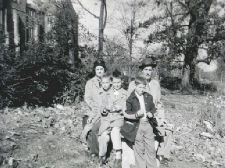
Helen McCarthy came to Columbus almost 50 years ago from Detroit with Gordon (Mac) and her three sons, Tim, Joe and Michael. Gordon McCarthy had been a salesman for Samsonite in Detroit, which at that time was known not only for its premier luggage but also for its folding chair and table products. Gordon McCarthy left the company in 1951 with a sizeable severance package and line of credit given by the owner of Samsonite in appreciation for his work. With it, he and Helen determined to start into the young and growing industry of equipment leasing.
"We'd go to her home and decorate it for Christmas, and she'd tell us where every single piece went. She was something else," Jacobs remembers. "She was a good hard business person - but she was always bringing in hot lunches for every-one. She was a lot more than just a boss."
McCarthy came to Columbus almost fifty years ago from Detroit with Gordon and her three sons, Tim, Michael and Joe. Gordon McCarthy had been a salesman for Samsonite in Detroit, which at that time was known not only for its premier luggage but also for its folding chair and table products. Gordon McCarthy left the company in 1951 with a sizeable severance package and line of credit given by the owner of Samsonite in appreciation for his work. With it, he and Helen determined to start into the young and growing industry of equipment leasing. They settled on Columbus as a prime market and opened the AAA's first location at 546 N. Park St. The pair worked hard and bet right - in less than a year, AAA grew large enough to buy out its only other competitor in the city and has been growing ever since.
Despite already having what many would consider a full-time job - three sons in grade school - Helen ran half the business. Gordon handled sales while she kept the books. AAA was located for more than 18 years in the North Market build-ing, among other locations, before settling at 830 N. High St. on the corner of Hub-bard and High. After Gordon's death in the early '80s, Helen ran the entire business.
Two of her sons, Tim and Michael, returned over the years to join her in the business. "I think I missed it," says Tim. "It's a service business; you either love it or you hate it. And she loved it."
AAA Rental & Sales grew over the years into one of the leaders of the rental industry. McCarthy's son Tim says the business at one point owned more 100,000 chairs - 66 percent more than any other company in North America. AAA has provided seating for events all over the continent, from The Ohio State University graduations and Rolling Stones and Pink Floyd concerts to appearances of the Pope.
"She was proud of the achievements of the company, but she didn't wave a flag about it," he says. "She did not take advantage of the business - Mother never attended a show that was out of the city. That wasn't her thing. Her thing was running it, making sure things ran right."
Helen worked until the final days of her life and seldom missed a day. "She was very hands-on," says Tim McCarthy. "Helen did it her way, she was the owner and hers was the way it went." After Gordon's death Helen moved the company away from chair and equipment sales and almost completely into rentals. Having grown up in the Great Depression, says Tim, she was an extremely cautious and conservative businessperson.
She also liked to travel in her rare time away from the business. She and her husband took many automobile trips around the state in the early years, seeing "just about every attraction in Ohio," according to Tim. On her own, she traveled around Europe and once kissed the Blarney Stone in Ireland.
Gordon (Mac) and Helen McCarthy founded AAA Rental & Sales Co. almost 50 years ago. Currently located in the Short North at 830 N. High Street, AAA provuides seating for events all over the continent, including rock concerts and visits by the Pope.
She was also an excellent cook, specializing in the dishes of her family's Ukrainian background as well as English dishes like Sunday roasts to appeal to her husband's British Isles heritage.
"She was a very strong personality, as was my father," says Tim McCarthy. "When my mother and dad started the business, it wasn't easy times. Mother was taking care of three sons - she had meals to put out and had to keep up with the books of the company. Many men and women would probably wilt."
Jacobs remembers her as a hard worker. "She was an excellent judge of people," she says. "I never met anyone like her; she'd say, 'Watch that one, Neva, make sure you get what you're supposed to,' and she was always right!"
But, says Jacobson, she was also a caring person. "She had a gentle soul in her. She loved to give to food shelters, she gave linen to churches, and donated to AIDS organizations É if she could help anyone, she would. Lots of people probably don't know that about her."
(Printed November 2002) By Cindy Bent
A special unveiling of Michael McEwan's Portrait of Eva Mahaffey to be held on Gallery Hop night of November 2 at Mary Catherine's Antiques
Straight From The Heart: In Memory of Eva Mahaffey
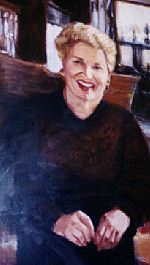
For nearly 23 years, patrons of Mary Catherine's Antiques were greeted by the warm smile of owner Eva Mahaffey ensconced in her favorite rocking chair by the front window, always ready for a chat.
Now, six months after cancer took Mahaffey from her familiar chair and the neighborhood she loved, her broad smile will look out on her old friends again.
On Saturday, November 2, friend and painter Michael McEwan will unveil his new portrait of Eva Mahaffey at Mary Catherine's Antiques. It will remain there along with McEwan's other work in a month-long show of "Studio Selections."
Mahaffey bought the building at 1128 N. High Street and opened the antique shop in 1979, one of the first arts businesses to move into the troubled neighborhood. Her daughter Melaine joined her mother soon after in running the shop, and the pair worked side by side for two decades. Mary Catherine's became a popular destination as confidants and collectors gathered daily with Mahaffey to share their thoughts and laughter.
Painter McEwan befriended Mahaffey not long after becoming her tenant in 1998. He rented studio space above Mary Catherine's and would often take breaks from his work to come down and join the group that always seemed to be in the shop visiting with her.
"She was so outgoing," McEwan says. "She attracted people. She probably had hundreds of friends. It was like a mini-salon. Being around her gave you a very warm, Italian-mother kind of feeling."
The arts and the Short North were a couple of her favorite topics. Mahaffey herself worked hard to give people something to talk about, as one of the pioneer community activists who helped make the Short North the bustling success it is today.
Mahaffey was a founding member of the Short North Business Association and worked doggedly in the campaign for graffiti removal, street trees and other causes. She also acted as benevolent landlord to the fledgling Neighborhood Design Assistance Center and rehabilitated properties herself.
The portrait of Mahaffey is somewhat a departure from the rich Midwestern landscapes that are McEwan's usual subject matter. He has evoked Mahaffey's innate glow with warm tones and characteristically illuminating brushwork. He says he is always willing to entertain a commissioned work, and Mahaffey's smile is sure to draw more inquiries in the future. But this painting came straight from his heart as an offer made spontaneously to Eva's daughters at her memorial service this past April.
"I think she'd get a kick out of the portrait, but she did not like to draw attention to herself," says Melaine Mahaffey. When Eva became ill, Melaine had a plaque affixed to the front of the shop designating it as the Eva Mahaffey building - to her mother's displeasure.
"She didn't like it at all," Melaine says with a wry grin. "She didn't say anything; she just made a face and never said a word about it after that."
A special unveiling of McEwan's portrait of Eva will be held at Mary Catherine's Antiques, 1128 N. High Street, on November Gallery Hop night (Saturday, November 2) from 6 to 9 pm The portrait, along with McEwan's other works will remain on view throughout November.
Artist Michael McEwan has completed a portrait of Short North advocate Eva Mahaffey who passed away last April - "She probably had hundreds of friends," says McEwan.
(Printed August 2002) By Maria Galloway
John Hansan: Lover of Birds, Freedom and Beauty
Friend and Italian Village neighbor John Hansan passed away last month at the age of 46 after a long battle with cancer.
Who was John Hansan, you might ask, and why should this be important to me? Because it's people like John who have made a big difference in small, quiet ways. He worked for the state and for the people who lived in the state, not just for the salary and the benefits. He loved nature and managed to find the wild parts of a central city. He shared his excitement with anyone who would listen.
Some people leave behind big muddy foot-prints that are hard to fill. Think Teddy Roose-velt. Some people walk lightly on the earth, leaving a slight trace of their path, yet the influence they have on other lives is like a
pebble tossed into a quiet pond. The ripples spread, sometimes to places unseen. John was one of those people. He was a pacifist and a bird watcher, an environmentalist, a historian, a Democrat, a peregrine falcon fanatic, a husband and a dad.
A true child of the sixties, he was too young to be personally involved with the chaos of that era, but old enough to be influenced by the ideals. Just a year younger than Mary Ann Vecchio (she was but 14 when she became the Madonna with arms outstretched) during the events at Kent State, he was deeply affected by the violence and was kicked out of high school for wearing a black arm band.
Later he attended Kent State and was involved in the ten-year commemorations. He was also influential in getting a formal apology from the state, delivered by Gov. Celeste, for the May 4 events. He won awards for his conservation efforts: simple things like implementing the use of energy efficient light bulbs in the State Office Tower to sensible things like issuing solar powered calculators.
Veteran Short North people-watchers might have noticed a thin, slightly stooped bearded man wearing office clothes
(although never a suit) with a longish yet conservative haircut, although on closer inspection there would be a long rattail braid peeping out from his
shirt collar or dangling down his back. (The braid would emerge from hiding as soon as John got off work.) He often came equipped with binoculars or a camera and always had a black fanny pack &endash; which I recently learned contained a falcon first-aid kit, tools of the trade for the Peregrine Patrol which he worked for many years. He also worked as an Historic interpreter at the Ohio statehouse. John was one of those people whom you should have known, or known better.
John leaves two sons, Kent and Scott of Columbus, one the spitting image of his wife, Tammy, the other the spitting image of John. Two fine boys whom he saw through childhood and to the edge of adulthood. Fortunately that was enough, since it was all that could be.
Farewell to Corbett Reynolds
The Most Interesting Man We Have Ever Known
June 2002
by Thom Wittbrodt and Scott FordThe Short North community has lost another one of its most loved and respected contributors. The first of May brought about the passing of Corbett Reynolds, who died of a heart attack while returning from vacationing in Florida. He had just celebrated his 58th birthday.
Corbett Reynolds, a nationally recognized local artist, was most popularly known for establishing the Red Party, an annual dance event held in Columbus over the past 24 years. The event was always visually stunning and attracted thousands of enthusiastic revelers for a magical evening to gather together and become one giant living art installation.
The Red Party impacted the Short North every fall as shops and restaurants contributed to the cause by donning elaborate window displays and decorations in the theme of the party. Corbett put the Columbus gay community on the map nationally, and through his inspiration, similar events across the country known as "circuit parties" have been used to raise literally millions of dollars for AIDS organizations and other charities.
While Corbett was probably best known for making us see Red, there are many more fascinating facets to this man. As a pioneer for the revitalization of the area, Corbett purchased and began renovating his Victorian Village home at a time when the neighborhood was less than desirable to live in. His home on Neil Avenue became a continually evolving piece of art that he took great pride in.
Corbett had an incredible way of turning ordinary items into extraordinary works of art. In his most recent New York City installation "Glass Menagerie," he used carefully selected glass items and arranged them into large colorful spires. In another, "The Last Supper,"
displayed in the Short North, he used hundreds of cobalt blue bottles arranged on a long underlit table. On the wall were 12 bottles representing the disciples, each on its own pedestal. Resting on the center pedestal was an old antiseptic bottle representing Christ.
He always seemed to be able to give value and meaning to things that other people would discard. That mindset was also a key to the way he treated people. Red was not the only theme to his parties, or his life, his love for all people was also a unwavering force in his life. All were welcome &endash; from the shortest to the tallest and everyone in between - and all were equal. He consistently saw the good qualities in other people, just as he saw the good qualities in the items he used to create his art.
As the theme of his eulogy emphasized, Corbett helped us see the world through his eyes. Without his vision to guide us, our world will now be a little less interesting.
(Printed May 2002) By Andy Klein
Short North Loses Founding Mother
Early in March of this year, Eva Mahaffey's daughters helped their mother into her car for a drive through the neighborhood. As Melaine slowly maneuvered through Victorian Village, Eva admired the crocus and forsythia and the other first signs of spring in her neighborhood and smiled at the ongoing new residential construction and renovations up and down the streets. Most importantly, though, Melaine wanted her mother to see the construction of the arches along High Street in the Short North Special Improvements District. Eva's eyes lit up with excitement as they viewed the 11-foot-deep excavations and galvanized steel bases rising from the ground. Melaine explained to her mother how later this year illuminated arches would straddle the street from Smith Place to Poplar. Here was concrete proof that Eva's vision for a unified and revived commercial district along High Street had come true.
Sadly, it was her last trip through her beloved neighborhood. Eva Ricci Mahaffey died April 9 of a brain tumor, surrounded by her loving family and wrapped in the comfort of her longtime Victorian Village home. She was 74. With her death, the Short North has lost a vital link to its past and a visionary for its future. As a building owner, business owner, landlord, resident and community activist for over twenty years, Eva spurred along the city and her neighbors to implement many improvements we take for granted today.
She led the campaign for street trees, pedestrian lighting, brick pavers and new curbs along High Street in the early '80s, literally paving the way for the revitalization of the Short North. Eva also helped get the Neighborhood Design Assistance Center up and running around the same time by leasing a storefront to Bob Busser and his staff at 1128 N. High Street, next door to her shop Mary Catherine's Antiques, which opened in 1979.
Eva installed the rosewood storefront now in place there, one of the first designed by NDAC. She maintained one of the nicest apartment buildings on High Street, sanding wood floors, installing new bathrooms and brightening the look of her building over the years. Despirte the ongoing renovations, Eva kept the long-term tenants she inherited when she first purchase the building, some remaining there for thirty years or more.
Like many other fiercely independent entrepreneurs one finds all along High Street, she was a single woman operating her own business - in Eva's case, with her daughter Melaine. Now successfully established as a leading antique furnishings retailer, Melaine and Eva worked tirelessly to unify the neighboring used goods dealers (including George Brown of Biashara, who also sadly left us recently) to coordinate hours of operation and eadvertise jointly, a precursor of today's Short North Arts District.
Eva also worked closely with the Godman Guild Settlement House over the years as a leader of the Guild's business league, first known as the Association of Near Northside Businesses and later the Short North Business Association, and with the annual Mary Cupp Christmas party for children in the neighborhood. Her residence in Victorian Village was one of the first and finest residential renovations in the area and she served with distinction on the Victorian Village Commission in its earliest days.
While we all will miss Eva's brilliant smile and razor sharp intellect, we can still bask in the glow of the good works she prerformed and inspired others to achieve. Her daughters Kimber Perfect, Sharman Sayre and Melaine Mahaffey and their families shared Eva with us during her life, and we join them in both their sorrow and their watchful anticipation of the arches illuminating High Street later thie year knowing Eva would approve.
(Printed August 2001) By Fred and Howard
Norma McPeak (1926-2001)
Few free spirits "live" in this day - people who live each moment of the day and who, in turn, outwardly express their love of life. For fifteen years, the Short North was blessed with such a spirit in the form of Norma McPeak.
Norma treasured every moment like it was a party, and when it was a party, she knew how to enjoy it. The martini was her "food" of choice, and she was always "hungry."
Statistics are not important, but for the record, Norma McPeak was born in 1926 (some say with a martini glass in her hand) in German Village. Her parents' home cost them twenty-five cents - it was raffled, and her grandfather, who paid a quarter for the ticket, won the home which stayed in their family until the seventies.
Norma was employed at Providence Insturance and later at the Lazarus Bookstore - her second love was books. Later, she held a position at Winston Wilson Jewelers. When she learned of her cancer, Norma moved to Cheyenne, Wyoming, to be with her son, Dr. Dennis McPeak, and his lovely wife, Leslie.
Norma continued her love of life with visits from friends around the country and with eight and ten-page "Chronicles from Cheyenne."
On a recent Sunday evening, following a few martinis and a good dinner, Norma retired - permanently. She died in her sleep on July 9, 2001. Normaa is survived by a sister, Carolee Copley, and her son and daughter-in-law, Dennis and Leslie, grandchildren Michael and Connor and a plethora of friends.
Donations may be made to the Columbus Cancer Clinic or the Hospice House in Cheyenne - or you may choose to drink two martinis, one for you and one for Norma.
(Printed January 2000) By Maria Galloway, pm gallery
Sandra E. Corbett (1949-1999)
The Short North lost a friend in December when Sandy Corbett died. A longtime employee of pm gallery, she was also an artist and craftsperson who exhibited, and will continue to exhibit, her paintings and jewelry at pm.
Sandy was a complex person, weak of body, strong of will, loving the aesthetic, the beautiful, the morbid, the modern, the ancient, the avant-garde. Her paintings of petroglyphs preceded the Southwestern craze by about a decade. (I had never even heard of a kokopelli before she came in the door.) Her jewelry was bold, rich with beads from all over the world. Yet she preferred to wear gold and silver jewelry made by her friend Tommy Louthen. She helped many young artists design their booths and refine their wares and was greatly saddened when she physically could no longer do the shows herself.
Sandy was active to the very end, leaving freshly baked Christmas cookies on her kitchen counter. Death and pain were constant companions to be fought with, stared down and spat at. The past year was not a good one as her body kept finding new ways to betray her. But during her last months, she learned to surf the Net (although she didn't completely master e-mail), which opened up a new world to her from the comfort of her heated, vibrating chair - the latest in her quest for the "ultimate" chair. She went to Winterfair one last time, in a rented wheelchair, wearing out her companions once the mortification of being seen in the chair wore off.
She worked at pm during the December Holiday Hop, boxing dozens of Christmas ornaments. She worked the Saturday before she died, chafing because she wasn't allowed to work even more hours. I wanted her to pace herself, and she wanted to throw herself into the holidays as she always had. I don't think she realized how frail she was, despite the fact tha all of her coats were now too large to wear.
In the end, death came with style and grace, as befitted a woman for whom both were important. Wouldn't we all wish to go in bed, with our beloved dog at our side. "If I should die before I wake...
Her ashes will be divided between her family here and in Florida, also fitting for someone who could no longer travel to be with those she loved. Think of Sandy when you wear your Birkenstocks, smell patchouli, find a really smooth writing pen, wear black, tell a hillbilly joke, eat kumquats or when having an extreme aesthetic experience. Sandy reveled in life. So should we all.
(Printed November 1999) By Her Friends
Nancy "Nan" Beauchamp
"Princess" left the building on September 25, 1999. Born in Toledo, she graduated from Wittmer High School in 1975 and Ohio Wesleyan University in 1979, as a music major. Among many of her life accomplishments, Princess was an interior decorator, patron of the arts, actress, lover of animals and a studied traveler.
She was employed by The Ohio State University in the Department of Materials Science and Engineering. A longtime resident of Victorian Village, she was an avid clotheshorse with a shoe fetish, who could spot a smart deal in any thrift store in America! Cigars, martinis, snow domes, art deco dishes and objets d'art all came under her careful scrutiny! Enjoyed by thousands, Princess performed with the seventeen-piece swing band, The Musical Ramblers as the "Girl Singer." Her guest appearance as lead violinist in the Cowtown Mulonga tango orchestra brought her many fans to their knees!
As the undisputed Queen/Dictator of the Sunday Afternoon Music Club, she presided over the musical theme each month with amazing vision. Her spectacular music collection will continue to be enjoyed by the club. (It was graciously donated to the club by her family.)
Nancy Beauchamp. She was just Nan to us, but there was something mesmerizing about her. A complex, difficult, energetic and flamboyant personality, she seemed to embody the spirit of the Short North. Nan resided here since the early '80s, working her peculiar visual magic at the Robert Kuhn Gallery, and as a designer for Functional Furnishings.
She flew around the neighborhood in an old flesh-colored Mercedes, her shock of blond hair trailing behind her, competing with her scraves like a modern Isadora Duncan, and her oversized jewelry like old Christmas tree ornaments. On almost anyone else, it would have looked like a costume, but on Nan, the wild prints and clean lines of her fabulous Forties-era wardrobe found a home that matched their energy and idiosyncrasy.
Nan lived for the arts: visual, decorative, and most of all musical. Her dramatic turns with her swing band, the Ramblers, were (like her) eclectic and extraordinary. She was a model, and nudes of her have hung with great fanfare in the neighborhood. The artist fondly remembers their session, where, liberated by some sophisticated adult refreshments, she was encouraged to spread faux menses over her breasts and stomach, a triptych entitled Period Piece.
Never faint of heart, she attacked the project with the same wit and verve that was her trademark. Horrified later that the work, deemed too controversial, was to be renamed Potent Image, at the request of the gallery owner where it hung, she began a personal campaign against the hypocrisy of the act. She inspired fierce and lively debate and created a new set of begrudging admirers in the conservative Columbus arts scene.
Even those who came to know Nan only after her diagnosis with cancer found her to be an inspiring and generous soul. She worked hard on her alternative therapies, convinced of her remission and eventual cure. Her lifespan far exceeded the expectations of her traditional physicians, but couldn't match her own. Her greatest pleasure, when she was well enough, was to walk through the Short North, experiencing all the urban energy of this raw, real neighborhood so unique to Columbus. It was a place where was felt she belonged, and for a soul so separate, so extreme, that was a blessing too rich to be asked.
We love you Nan, and hope you know how much your restless spirit continues to inspire and confound us. As you once said, "Peace should be a verb, not a noun, it requires a little effort." We wholeheartedly agree.
Return to Homepage www.shortnorth.com